
Running a Sex Offender Check in Fulton County
The official starting point is the Illinois Sex Offender Registry. Illinois State Police updates the public database daily and permits searches by a person's details or by location. Select Fulton in the county field for county-wide results. A city or ZIP search can be useful for Canton, Farmington, Lewistown, or another known place, but municipal boundaries and mailing addresses do not always describe which police agency has jurisdiction.
The registry is one access channel. A person who needs to verify an address, a compliance notation, or a registration duty should contact the law-enforcement agency serving that location. Outside municipalities, the Fulton County Sheriff is an important registering agency. Within a city, the police department may have jurisdiction. That division explains why the state database is best for discovery while the responsible agency is best for a current confirmation.
Start Fulton Searches Broadly
Illinois State Police advises searchers to begin with first and last name only, then add filters. This reduces the chance that a misspelling, old address, or optional field will hide a possible result. Check aliases and physical descriptors on the profile before deciding that two similar names refer to the same person. A date of birth can help, but not every public profile contains the same set of fields.
The official registry terms and disclaimer explain the limits of the public information. The Fulton County result screen may reflect information supplied through a registering agency, and a status can change. Treat the screen as a lead for safety planning and official confirmation, not as proof of a fact that falls outside the registry's purpose.
The registry disclaimer interface can be reviewed at its Illinois State Police source.
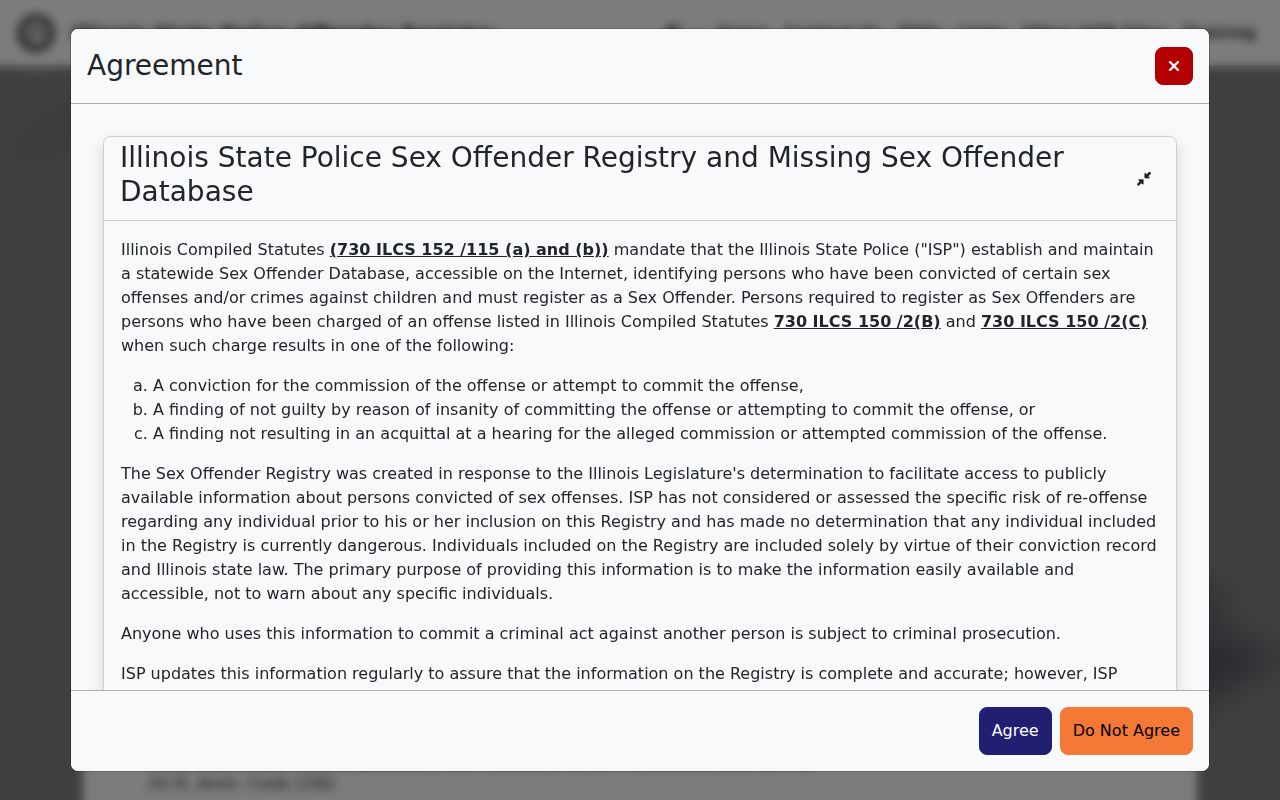
That notice sets the terms for responsible use before a Fulton County offender search begins.
Searching the Illinois Sex Offender Registry
The Illinois State Police Offender Registry covers people required to register in Illinois. Its public controls support both a known-person lookup and a place search. Use this sequence to limit false matches:
- Open the official registry and read its conditions of use before continuing.
- Enter first and last name, or choose Fulton County for a broad local result set.
- Add birth date, city, ZIP code, or compliance status only when the first result is too broad.
- Open a likely profile and compare aliases, photograph, physical description, address, agency, offense, and status.
The official registry search interface shows how the state groups these controls.
The field layout supports a narrow Fulton County query without assuming an unverified distance or radius value.
| Field | Type | Required | Use |
|---|---|---|---|
| Last Name | Text | Conditional | Pair with first name for the advised starting search |
| First Name | Text | Conditional | Can combine with other known details |
| Date of Birth | Date or text | No | Helps distinguish similar names |
| City | Text | No | Narrows by reported city |
| County | Dropdown | No | Select Fulton for county-wide results |
| ZIP Code | Text | No | Uses a five-digit ZIP |
| Compliance Status | Dropdown | No | Read live options at search time |
| Geographic Search | Map or address controls | No | Supports place-based review |
Confirm Fulton Registry Entries Locally
Registration follows jurisdiction. A registrant reports to each agency with jurisdiction where the person resides, works, attends school, or is temporarily domiciled for the statutory threshold. For a location outside a municipality, contact the Fulton County Sheriff's Office at 268 W. Washington Ave., Lewistown, or call 309-547-2277. A city police department may be the right contact inside its limits.
Ask the agency to confirm which office has jurisdiction and how suspected noncompliance should be reported. Do not confront a registrant or household. The registering office can compare its current information with the state entry and route a report through lawful channels. If the question concerns a criminal case rather than registration status, the Fulton County Circuit Clerk holds the filed court record.
Fulton County Sheriff
268 W. Washington Ave.
Lewistown, IL 61542
309-547-2277
What a Registry Profile Shows
A profile is designed to identify a registrant and explain the registration basis. It can include a current photograph, legal name, aliases, birth information, physical traits, address details, registering agency, status, and offense information. Some profiles also show marks, tattoos, scars, school or work data, or vehicle details when collected and published under law. Not every Fulton County profile contains every possible field.
| Name and Aliases | Legal name plus published alternate names used to help identify the registrant |
|---|---|
| Photo and Description | Photograph, age or birth date, sex, race, height, weight, hair, eyes, and identifying marks when shown |
| Address and Agency | Published location details, Fulton County, and the registering law-enforcement agency |
| Offense Information | Description, statute or jurisdiction, and conviction or adjudication details when available |
| Category | Illinois status such as sex offender or sexual predator, not federal Tier I, II, or III labeling |
| Registration Status | Published registration or compliance information, which should be confirmed if accuracy is critical |
Registry data does not provide the whole court file. Motions, amended charges, hearings, and sentence details may instead appear in Fulton County criminal court case records. Public conviction information is another distinct product maintained by the ISP Bureau of Identification.
A Missing Fulton Match Proves Little
A blank result is not a safety guarantee. Search criteria may be too narrow, information can change, and the public registry covers only people and information the law requires it to publish. Try a partial search with fewer fields, check spelling and aliases, and use the geographic controls if the concern is tied to an address rather than one known name.
A registry result also is not a general criminal-history report. The registry answers whether published registration information matches the query. CHIRP answers a different question about Illinois conviction information, and Fulton County court records show filed case events. Keeping those sources separate prevents a user from treating one narrow screen as a full account of a person's history.
Note: Search fields should be loosened one at a time so the reason a result appeared or disappeared remains clear.
Registration Requirements and Levels in Illinois
Illinois does not use the federal SORNA Tier I, II, and III labels as its public duration framework. The governing categories and dates depend on the Illinois Sex Offender Registration Act, the offense, custody and release dates, later violations, and other statutory events. For that reason, do not estimate an end date from a conviction date alone.
| Illinois Category or Status | General Duration | Key Rule |
|---|---|---|
| Sex offender not assigned lifetime registration | Generally 10 years after conviction or adjudication if not confined, or after parole, discharge, or release if confined | Registration and verification follow the Act; reconfinement may toll time |
| Sexual predator and other lifetime categories | Natural life | Verification frequency depends on the statutory category |
| Registration Act violation on or after July 1, 2005 | Duration is affected | ISP guidance describes 90-day registration for the duration |
| Failure to comply | Additional 10 years | Runs from first registration after the violation; review request has a short deadline |
The duration authority is 730 ILCS 150/7. The ISP offender-registration FAQ adds agency guidance. Read the current profile and confirm with the registering agency instead of calculating status from old records.
Search Beyond Fulton County
The Illinois registry is the right state layer, but it does not replace a search of other states. The federal Dru Sjodin National Sex Offender Public Website searches participating public registries across jurisdictions. It is useful when a person may have moved or when an address lies near a state line. Results still originate with public government registries and retain each jurisdiction's limits.
The national interface can be viewed through the official NSOPW source.
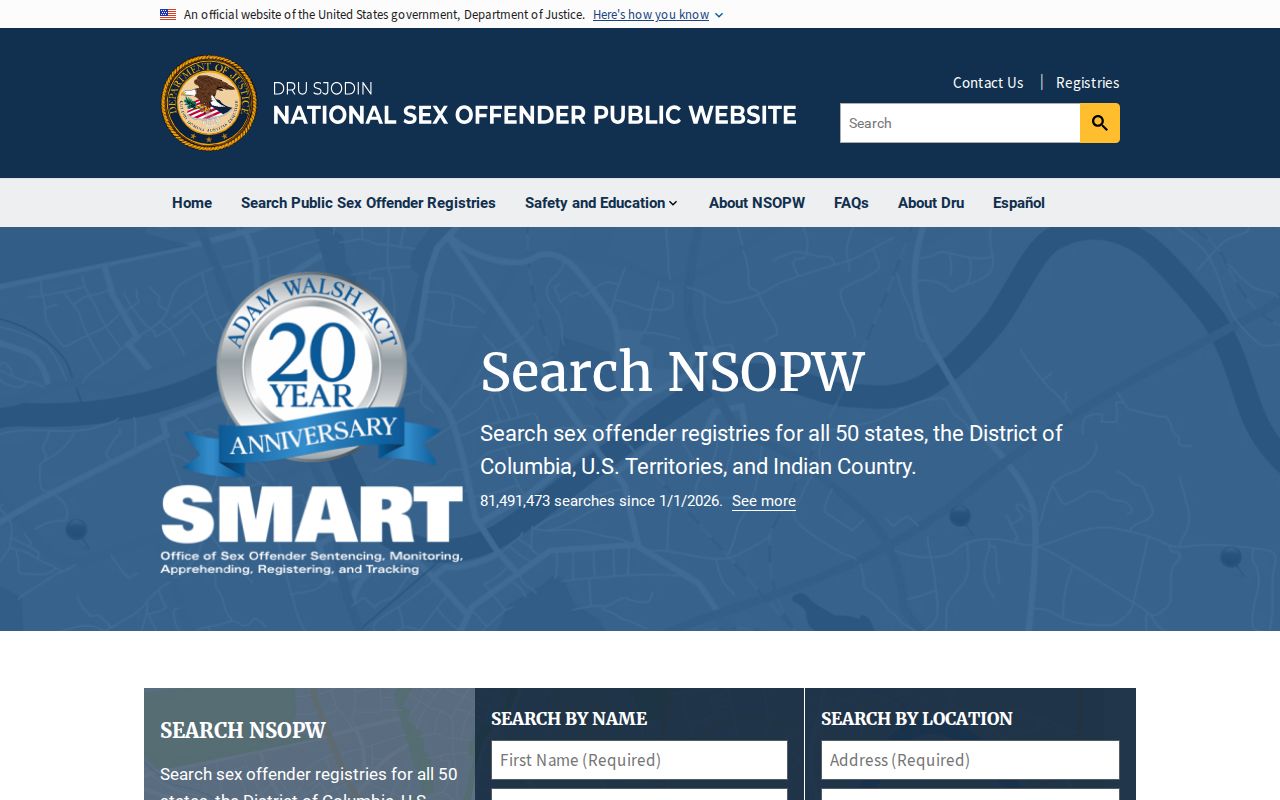
NSOPW expands geographic coverage, while Fulton County agencies remain the place to verify local registration details.
Report Fulton Registry Concerns
When an address or compliance entry appears inaccurate, preserve the exact profile details and contact the law-enforcement agency shown on the entry. Describe the concern without making threats, publishing personal claims, or attempting an in-person investigation. The agency can decide whether the report belongs with a municipal department, the Fulton County Sheriff, or the ISP registration unit.
The Fulton County Sheriff's official records context is also shown on the Canton Police source page.
Local agency contact is the confirmation path when the public registry entry and current conditions seem to conflict.
Lawful Use and Community Notification
Registry access exists for public protection, personal safety planning, and community awareness. It does not authorize harassment, threats, intimidation, vigilantism, or unlawful discrimination. Share official links rather than reposting profile images or turning a registry result into a claim about conduct that the record does not show.
Use registry data lawfully: Under 730 ILCS 150/10, registry information must not be used to harass, threaten, intimidate, or unlawfully discriminate.
The Fulton registration system depends on reports to police agencies and daily state publication. Responsible use protects the people seeking safety information as well as those whose records appear. If immediate danger exists, call 911. For a data concern, use the registering agency rather than direct contact with the person named.
The Canton police report-request workflow is visible at its official city source.
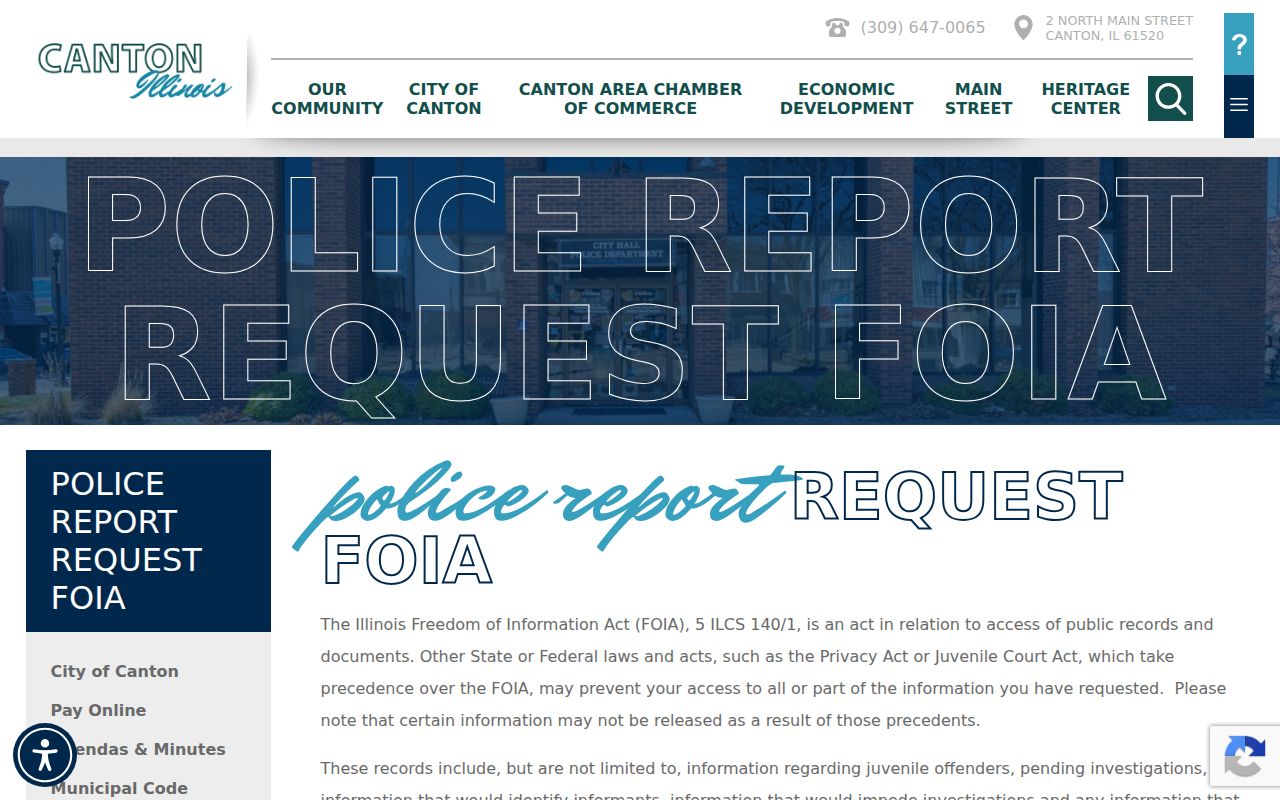
Police records and registry data remain separate channels, even when one agency holds both kinds of information.