
Criminal Cases in the Fulton County Courts
Fulton County felony and misdemeanor prosecutions share one local venue: the Fulton County Circuit Court in Illinois' Ninth Judicial Circuit. Canton, Farmington, and Lewistown do not operate separate municipal court portals. City ordinance, traffic, misdemeanor, and felony matters that belong in Fulton County therefore reach the Circuit Court docket. The State's Attorney files a complaint or information, or a grand jury returns an indictment. The Circuit Clerk then becomes custodian of the filed case record.
The clerk's office is in Room 207 of the Fulton County Courthouse, 100 N. Main Street, Lewistown, Illinois 61542. It is open Monday through Friday from 8:00 a.m. to 4:00 p.m. Call 309-547-3041, extension 206, or email cmarkley@9thjudicial.org before traveling when a Fulton County criminal file may be old, sealed, or stored off site. The court file is separate from the Sheriff's arrest report and jail booking record.
The Illinois Courts directory shows the Fulton courthouse and its access resources.
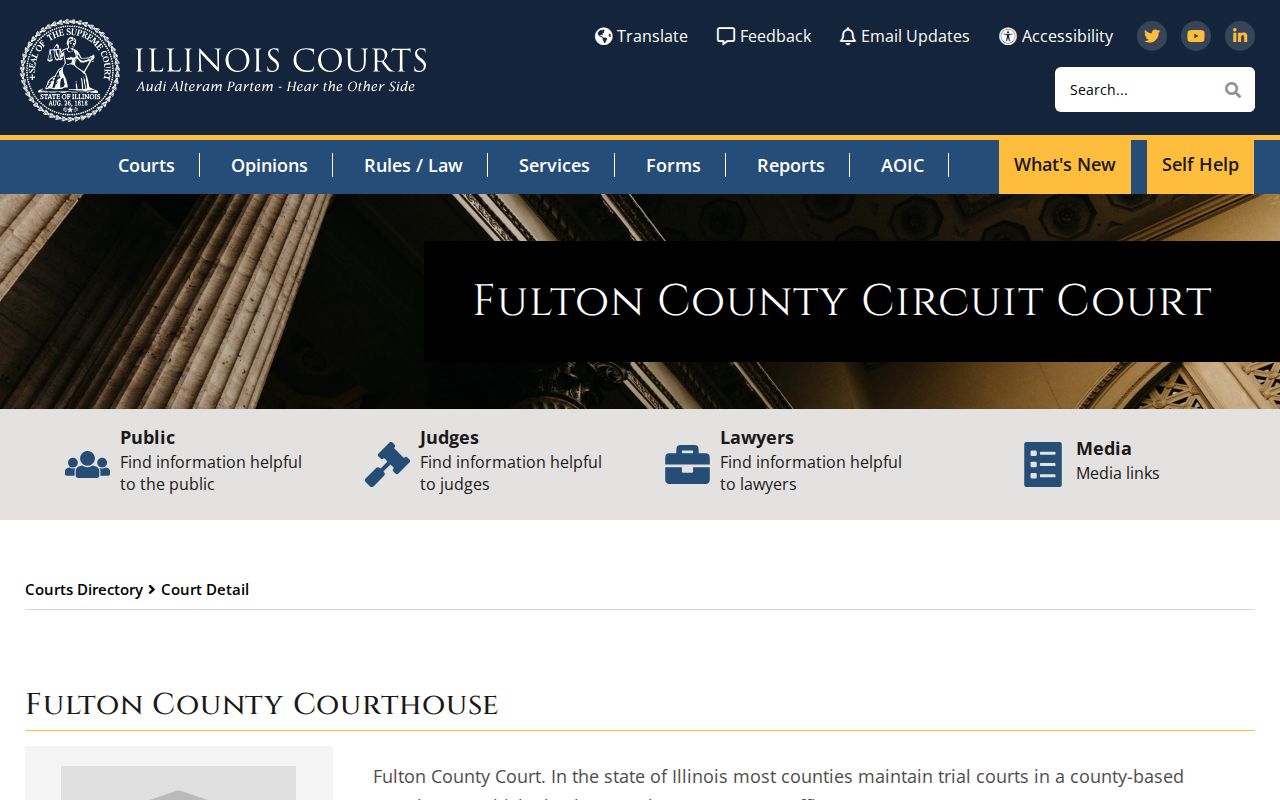
That official listing confirms the local court, hours, accessibility contact, and the on-site tools available to case researchers.
Fulton Court Clerk Search Fallbacks
Fulton County does not publish a county-hosted open case-search form with a verified field inventory. Start with the Illinois Courts case-finder route, which points users toward re:SearchIL and available local services. The Fulton County court-location page also links Judici for certain online functions. Coverage and document access can differ by case, so a blank remote result is not a final answer.
When a remote search fails, call the Circuit Clerk with the full name, approximate filing year, and case number if known. The courthouse offers an e-filing computer station, printer, and scanner in the foyer of the clerk's second-floor office. Limited online legal research is available in the law library. Staff can identify how to request a plain or certified copy, but they cannot make legal judgments for a reader.
Fulton County Circuit Clerk
100 N. Main St., Room 207
Lewistown, IL 61542
309-547-3041 ext. 206
Monday-Friday, 8:00 a.m.-4:00 p.m.
The Circuit Clerk's official page identifies the Fulton County record custodian.
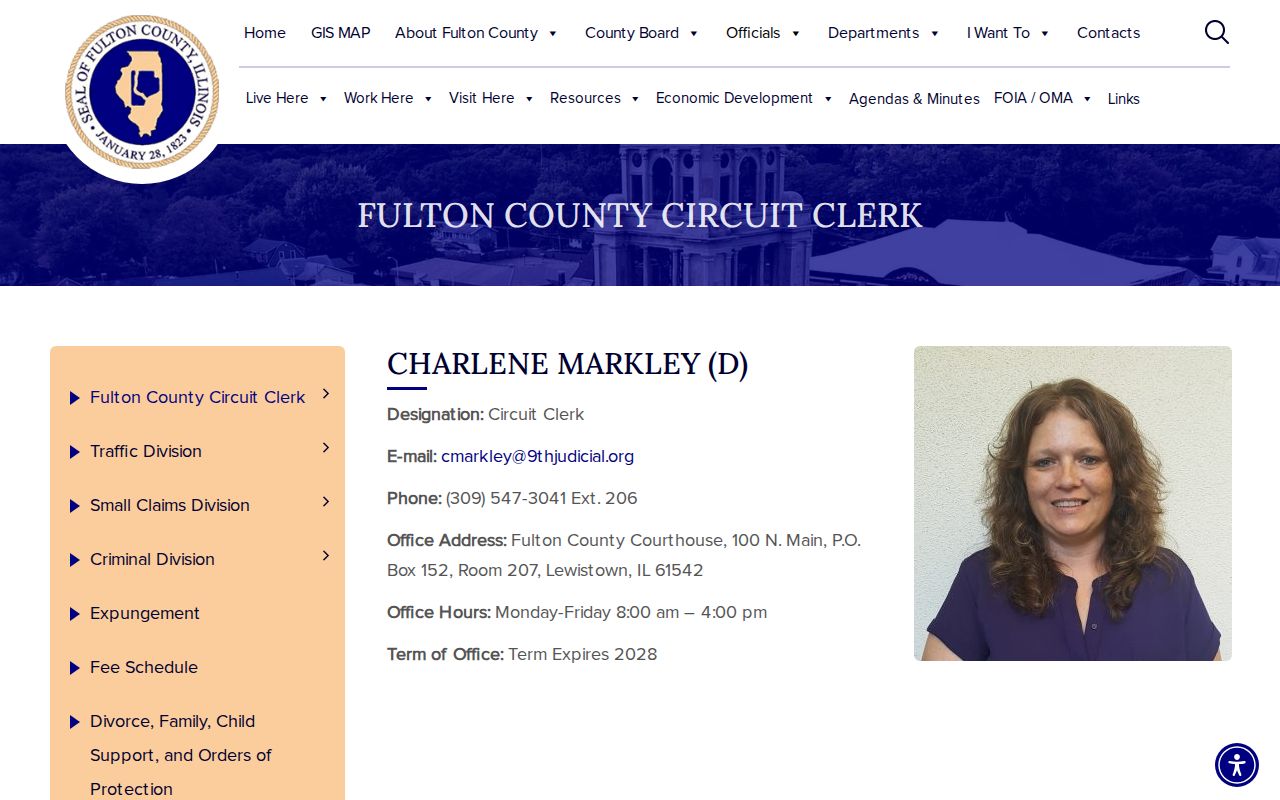
This county source is the sound place to confirm office contacts before requesting a criminal case file.
How to Search Case Records
A careful Fulton County case search moves from broad discovery to the official file. Names can be misspelled, aliases can create extra matches, and the same person may have several case numbers. Use the case number once found because it ties the docket, documents, payments, and later orders to the same proceeding.
- Open the Illinois Courts case-finder route and follow the available remote court-search option.
- Search by party name, then narrow with the county, filing year, case type, or known case number.
- Compare names and docket details carefully. Do not rely on a name match alone.
- Read the event list for charges, hearings, pleas, rulings, disposition, and sentence entries.
- Ask the Fulton County Circuit Clerk for missing documents or a certified copy when proof of the filed record is needed.
Because the county does not expose its linked portal's full form on its own site, these are the verified identifiers to prepare, not a claim that every field appears in every remote interface.
| Search detail | Format | Use | Limit |
|---|---|---|---|
| Party name | Text | Broad discovery | Confirm identity |
| Case number | Text | Best exact locator | Must be entered correctly |
| Filing year | Year | Narrows common names | May be approximate |
| Case type | Category | Separates criminal and traffic matters | Labels vary by portal |
| County | Jurisdiction | Limits results to Fulton | Farmington spans two counties |
The county court-location page documents the Judici route and courthouse access.
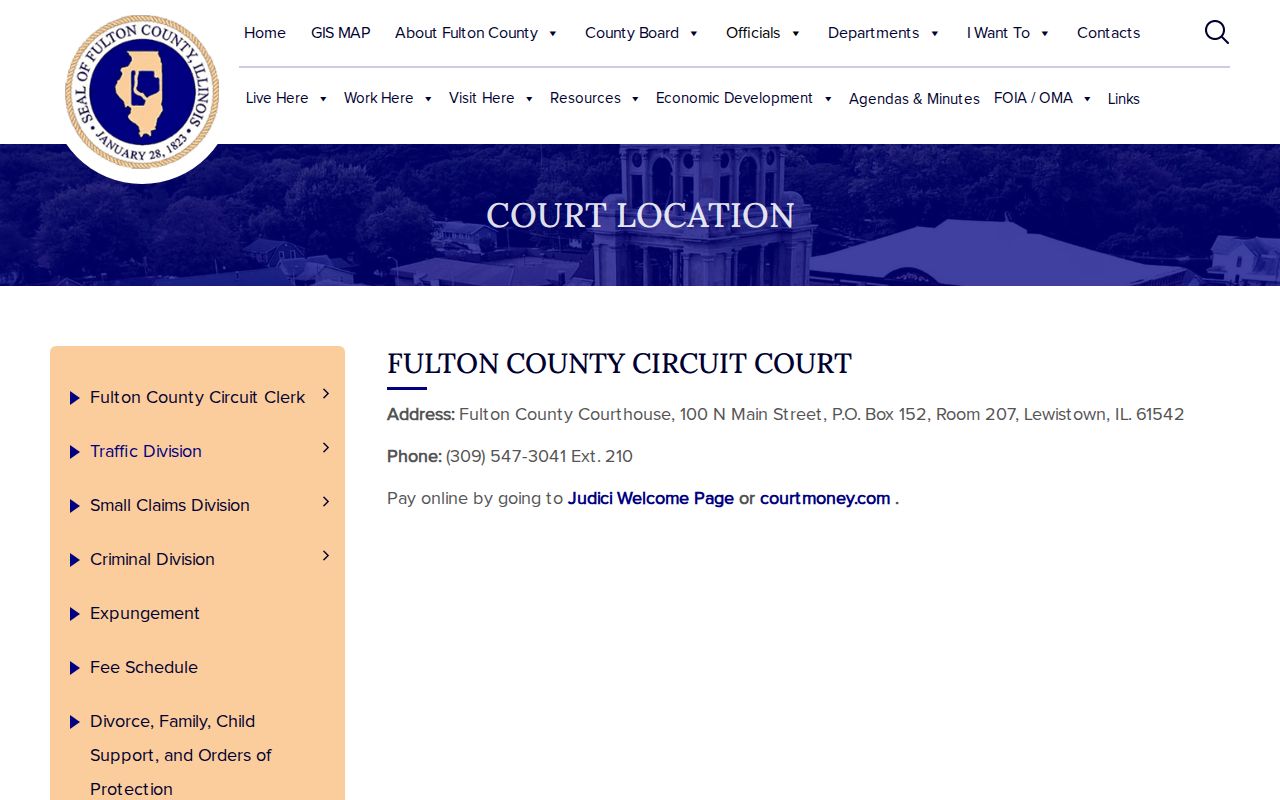
The screenshot reinforces why readers should preserve the case number and return to the clerk for authoritative copies.
Fulton Court Files Beyond CHIRP
The Circuit Clerk's file answers a different question than the Illinois State Police Criminal History Information Response Process, or CHIRP. CHIRP's public UCIA response supplies reported Illinois conviction information. It is not a mirror of every pleading and docket entry in Fulton County. A court case can show an initial charge, amendment, dismissal, acquittal, or pending status even when a public conviction response has nothing to report.
For a full trail, match three layers: the arresting agency's incident report, the Sheriff's booking material, and the clerk's filed case. Court events should be reported to the ISP Bureau of Identification and linked to the fingerprint-supported arrest cycle. Lag, aliases, incomplete disposition reporting, or name mismatches can break that link. When an outcome appears wrong, first secure the Fulton County judgment or disposition order, then use the state record-review and challenge process.
The Fulton County Sheriff's official page shows the separate law-enforcement custodian.
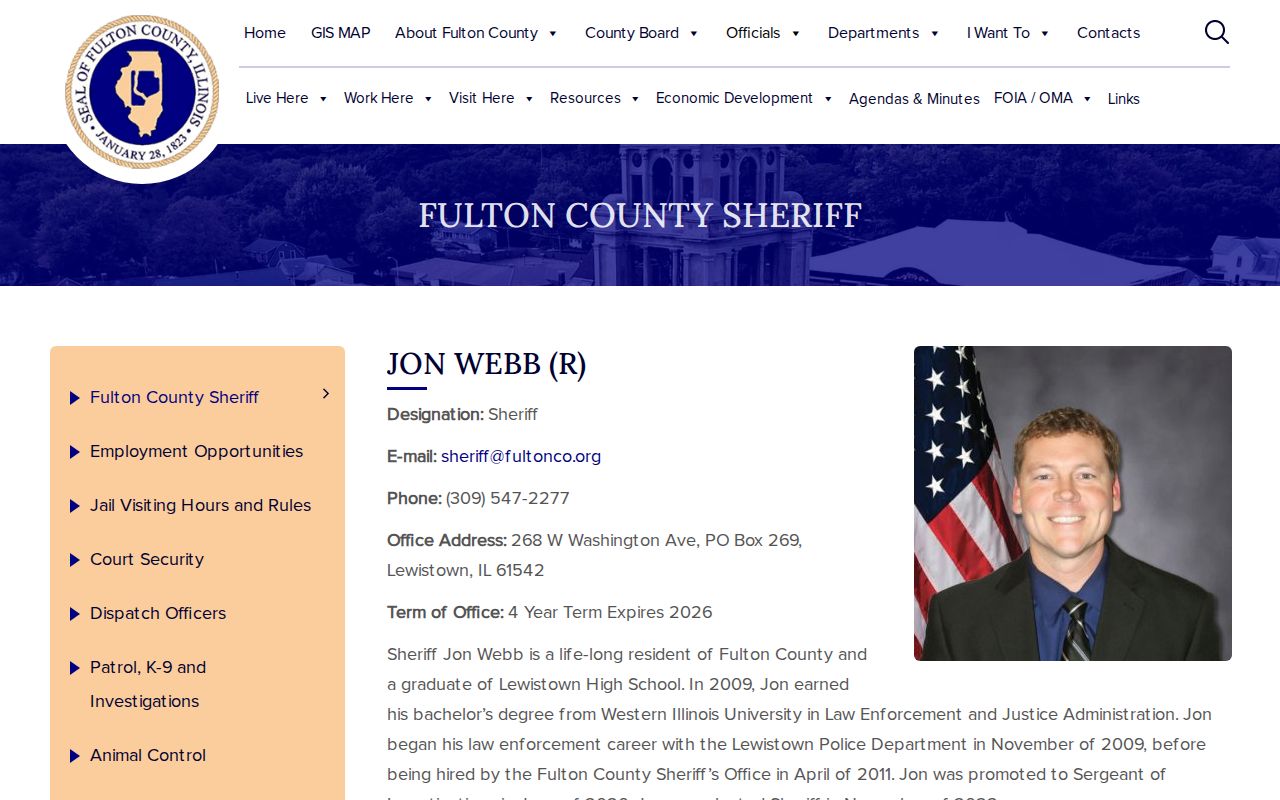
That separation matters: a sheriff-created report does not replace the filed Fulton County criminal court record.
What the Case File Shows
A Fulton County criminal case file can contain the charging paper, motions, court orders, docket entries, financial assessments, and the final judgment. The docket is a dated event list, not always the document itself. A disposition is the case outcome, such as dismissal, acquittal, or conviction. Readers should request the underlying order when the exact wording matters.
| Case Number & Court | Identifies the Fulton County proceeding and filing series. |
|---|---|
| Charging Document | States the accusation filed by the prosecutor or returned by a grand jury. |
| Docket Entries | Lists hearings, filings, rulings, continuances, and other dated activity. |
| Hearing Dates | Shows scheduled and completed court settings. |
| Disposition & Judgment | Records how each charge ended and the court's formal ruling. |
| Sentence & Conditions | May state jail, prison, probation, fines, assessments, and court-ordered terms. |
A dismissal does not erase the public file by itself. Eligible records require a later expungement or sealing process before ordinary public access changes. The Sheriff FOIA page illustrates the separate request path for police and booking material.
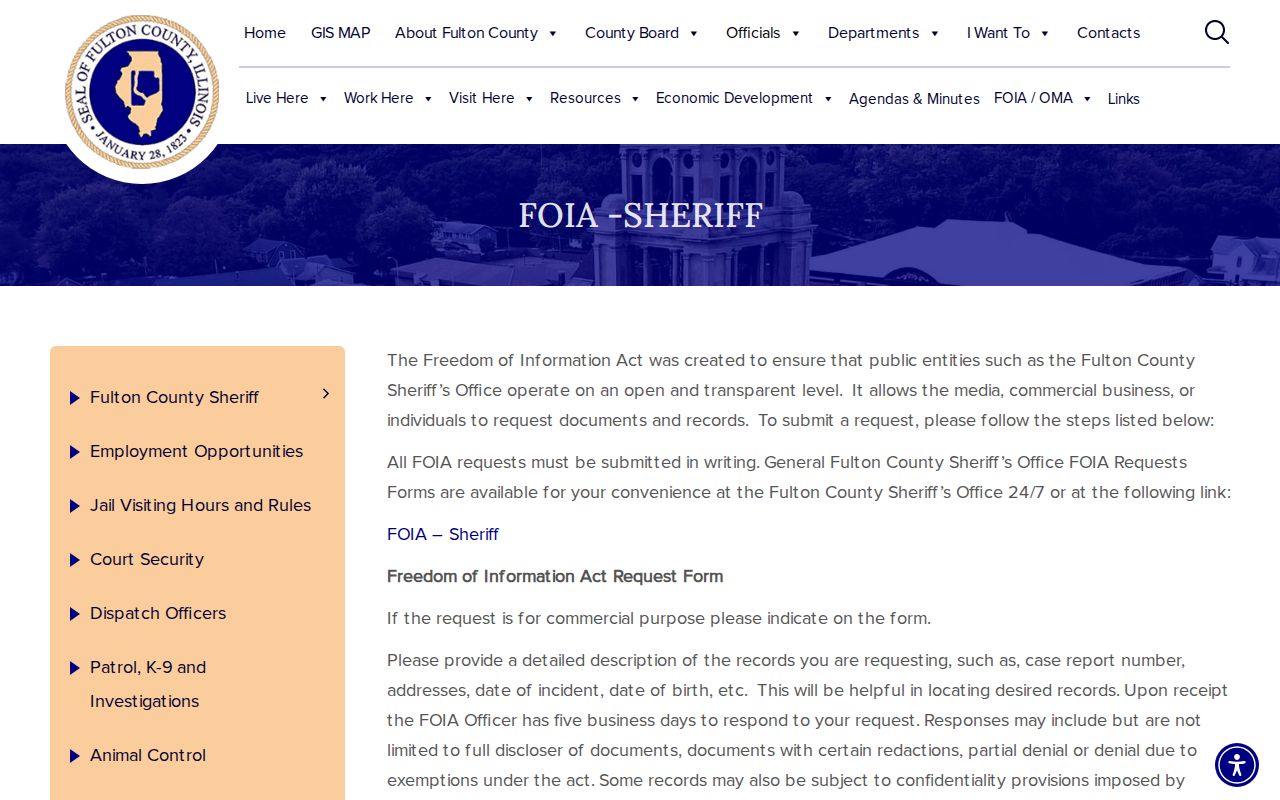
Use that channel for sheriff records, while filed pleadings and dispositions remain with the Circuit Clerk.
Historic Fulton Criminal Case Index
Modern court tools are not the only Fulton County case route. The Illinois State Archives provides a Fulton County Circuit Court Case Files Index covering 1825 through 1876. It is designed for historical and genealogy research, not current criminal-record checking. Search by surname and given name, and try partial surnames or spelling variants because nineteenth-century indexing may differ from modern spelling.
The index connects researchers to the Illinois Regional Archives Depository at Western Illinois University. IRAD is at University Library, 1 University Circle, Macomb, Illinois 61455-1390, and its phone is 309-298-2716. An index match is a locator. It does not reproduce the whole file or say how a modern court would treat an old proceeding.
Stages of a Criminal Case
Not every arrest becomes a Fulton County court case. Prosecutors decide whether and what to file, and a grand jury may return an indictment. After filing, arraignment is the hearing where the defendant is informed of the charge and enters a plea. Pretrial work can include motions, evidence issues, negotiation, and scheduled hearings. The matter then ends by dismissal, plea, trial verdict, or another lawful disposition.
Case flow: Charges Filed › Arraignment › Pretrial › Plea or Trial › Disposition › Sentencing
Sentencing follows a conviction and may include jail, an Illinois Department of Corrections term, probation, financial obligations, or other conditions. Fulton County Probation operates from Room 204 in the courthouse, but the public sentence order remains part of the court file. Supervision details can be restricted even when the judgment is public.
Reading Fulton Criminal Case Entries
The case number is the safest thread through a Fulton County docket. It separates people with similar names and helps the clerk locate a precise file. Case-type labels distinguish criminal, traffic, and other divisions. A charge class describes the alleged offense level, while a status entry tells whether the matter is pending, closed, or awaiting another event. None of those labels alone proves the final result.
- Arraignment
- The hearing at which the charge is stated and a plea is entered.
- Docket
- The chronological list of court events and filings.
- Disposition
- The formal outcome for a charge or case.
- Certified copy
- A clerk-authenticated reproduction used when proof of the official filing is required.
Read the last entry in context. A later amended charge or corrected order can change what an early docket line seemed to show. If the online event list is unclear, request the actual judgment or order from the clerk rather than guessing from an abbreviation.
Access & Restrictions
Illinois court records begin with a presumption of public access, but that rule has limits. Juvenile matters, sealed or expunged cases, protected victim details, private identifiers, and records restricted by statute or court order may be unavailable or redacted. Illinois Supreme Court Rule 8 sets statewide case and document confidentiality controls. A remote view may also show less than the paper or imaged file available at the courthouse.
If a known Fulton County case does not appear, verify the spelling, county, filing year, and case number. Then contact the Circuit Clerk. Farmington crosses Fulton and Peoria Counties, so the event location can determine which court holds a case. A city mailing address alone is not enough. Federal prosecutions are different again and use the Central District of Illinois docket through PACER, not Fulton County's Circuit Clerk.
Copies may carry statutory or actual reproduction costs, and certified copies may have a separate charge. Ask for an estimate because the researched county pages do not publish a complete criminal-copy fee schedule. Note: A missing online result can reflect restricted access, another venue, indexing, or delayed entry rather than proof that no case exists.